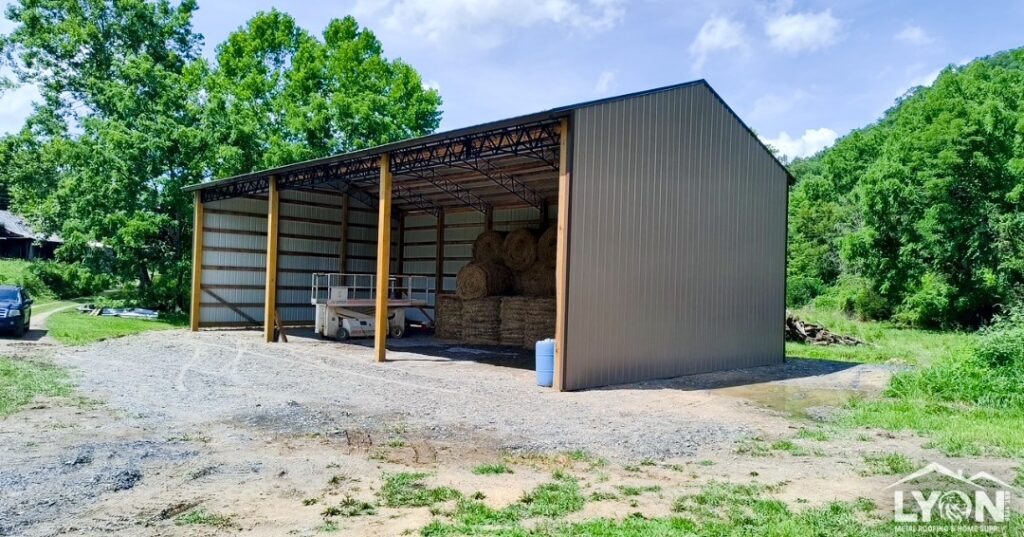

For farmers across Tennessee, protecting hay from weather damage is essential to maintaining feed quality and reducing waste. The Tennessee Agricultural Enhancement Program (TAEP) helps agricultural producers invest in infrastructure that strengthens their operations—especially hay storage barns. In this guide, we’ll break down TAEP hay storage reimbursement, eligibility requirements, and key deadlines, so you can determine if your operation qualifies.
What Is the Tennessee Agricultural Enhancement Program (TAEP)?
The Tennessee Agricultural Enhancement Program (TAEP) is a cost-share program administered by the Tennessee Department of Agriculture. Its goal is to help agricultural producers make improvements that increase productivity, efficiency, and sustainability.
Each year, qualifying farmers can receive reimbursements for approved agricultural projects, including:
- Livestock production improvements
- Hay equipment and hay storage structures
- Commercial equine operations
- Poultry and swine operations
- Row crops and fencing systems
- Agritourism, horticulture, and specialty agriculture
Depending on the program category, TAEP reimbursements range from $2,000 to $12,000. For hay storage projects specifically, reimbursements can reach up to $8,000.
TAEP Hay Storage Reimbursement Details
The TAEP Hay Storage Program is designed to help farmers build structures that protect hay from rain, moisture, and sun damage.
Cost Share Amount
Farmers may receive:
- 50% cost share reimbursement
- Maximum reimbursement of $8,000
- Maximum reimbursement rate of $4 per square foot
Reimbursement is calculated based on the eligible square footage of the hay storage structure, measured post-to-post (overhangs are not included). This funding can make a significant difference when investing in a new hay barn.
Minimum Eligibility Requirements
To qualify for the TAEP Hay Storage Program, applicants must meet one of the following agricultural operation requirements:
- 30 head of cattle
- 20 head of equid (horses, mules, or donkeys) involved in a commercial equine business
- 50 head of goats or sheep (combined totals allowed)
- 100 acres of hay production (first cutting only)
Additional eligibility details include:
- Acreage may be owned or leased within Tennessee
- Equids must be used for breeding, training, or boarding operations
- Goat and sheep numbers may be combined to meet minimum requirements
TAEP Hay Barn Structure Requirements
TAEP has specific construction standards for hay storage buildings. If you’re planning a structure with reimbursement in mind, it must meet the following guidelines.
Structure Requirements
- Minimum 1,200 square feet
- Minimum 14-foot eave height
- Structure must be used for hay storage only
- Must be a pole barn or hoop-style structure
- At least one side or end must remain completely open
Eligible Materials
TAEP allows reimbursement for:
- New lumber
- New metal roofing or siding
- Polymer-coated fabric (for hoop barns)
- Posts with a minimum diameter of 6 inches
Structures That Are NOT Eligible
The following structures do not qualify:
- Carport-style or garage-style buildings
- Side shed additions or extensions to existing structures
- Structures using galvanized metal tubing
Labor Reimbursement Rules
TAEP allows labor reimbursement, but there are specific conditions.
Eligible labor must:
- Be itemized on the invoice
- Be specifically for construction of the hay storage structure
Labor becomes ineligible if:
- The work is completed by the applicant themselves
TAEP Application Timeline
Understanding the TAEP timeline is important if you plan to apply.
Important Dates
- October 1–7 – Annual application period
- Mid-December – Approval notifications sent
- January – Reimbursement packets mailed
For the Hay Storage Program specifically:
- July 1 – Deadline to decline funding
- August 1 – Final reimbursement request deadline
Projects must be completed and reimbursement documents submitted before the program deadline.
TAEP Reimbursement Process
Once your project is approved and completed, reimbursement requires several documents.
Required Documentation
Participants must submit:
- Program-specific documentation
- Itemized receipts
- Project photos
- W-9 form
- Required educational certifications
The Tennessee Department of Agriculture audits all submissions to verify:
- Eligible purchases
- Correct purchase dates
- Proper project construction
Site visits may occur before, during, or after construction. Additionally, TAEP-funded equipment and structures must remain in use for at least five years from the purchase date.
2025–2026 TAEP Program Updates
Beginning with the 2025–2026 program year, TAEP applications will be split into two separate applications.
Application A
Covers programs such as:
- Cattle production
- Dairy
- Goat and sheep operations
- Hay equipment and storage
- Commercial poultry
- Commercial swine
- Row crops
- Commercial equine operations
- Working structures and fencing systems
Application B
Includes opportunities for producers involved in:
- Agritourism
- Fruit and vegetable production
- Honey bees
- Horticulture
- Organic farming
Applicants must provide a valid email address they actively monitor for program communication.
Beginning Farmer Option (BFO)
TAEP also offers a Beginning Farmer Option (BFO) designed to help newer producers improve their operations.
To qualify, applicants must:
- Be first-time TAEP applicants
- Have been farming 10 years or less
- Have filed Form 1040 Schedule F within the past two years (2023 or 2024)
If the farming operation began in 2025, the Schedule F form is not required. This option allows farmers to qualify with reduced minimum livestock or acreage requirements.
Important Purchase & Reimbursement Rules
Farmers should be aware of several key reimbursement rules.
- Purchases before October 1, 2025 are not eligible
- All materials must be purchased before the reimbursement deadline
- Backordered items may become ineligible if not delivered before the deadline
- Receipts must be in the approved applicant’s name
- Used or leased materials are not eligible
- Projects cannot be combined with another applicant’s project
- Applicants cannot purchase from a business they own
Reimbursements are also taxable income. Participants will receive a Form 1099-G for payments exceeding $600.
How Lyon Metal Roofing Can Help
If you’re planning to apply for TAEP hay storage funding, having a durable, compliant structure is critical.
At Lyon Metal Roofing, we help Tennessee farmers build strong, weather-resistant hay barns that meet TAEP requirements. Our metal roofing and building systems are designed to:
- Protect hay from moisture and UV damage
- Increase the lifespan of agricultural structures
- Provide reliable long-term storage solutions
If you’re considering building a TAEP-eligible hay barn, our team can help you design a structure that meets program specifications.
Final Thoughts
The Tennessee Agricultural Enhancement Program provides a valuable opportunity for farmers to improve their operations with financial support. With up to $8,000 available for hay storage barns, many Tennessee producers can significantly reduce the cost of building proper hay protection structures. If you believe your farm may qualify, start preparing now so you’re ready for the October 1–7 TAEP application window. And when you’re ready to build, Lyon Metal Roofing is here to help you create a hay storage solution that works for your farm.